
 Nowadays, when we think of a round of golf, we usually picture an 18-hole course. It is the most widely used format worldwide and one of the defining features of this sport.
But have you ever wondered why exactly 18 holes, rather than 15, 20 or 22? The answer does not lie in a mathematical rule or in a decision made from the very beginning. To discover its origins, we need to travel to Scotland, specifically to St Andrews, regarded as one of the most important places in the history of golf.
What began as a modification to a golf course eventually became the international standard we know today.
1. The origins of golf: what were the first courses like?
To understand why golf courses have 18 holes, we first need to look at how the sport was played in its early days.
Although similar games existed in different parts of Europe, modern golf developed mainly in Scotland. For centuries, it was played on natural coastal landscapes known as links. These were open areas featuring dunes, low grass, sandy terrain and uneven ground, all of which influenced every shot.
At that time, there was no universal number of holes. Courses were adapted to the characteristics of the land and the possibilities of each location. Some had five, seven or nine holes, while others had a different number.
One of the best-known examples was the Old Course at St Andrews, which once had 22 holes.
Golf was still a long way from having the organised format we know today, but those early courses laid the foundations for the sport.

2. St Andrews and its history: from 22 to 18 holes in 1764
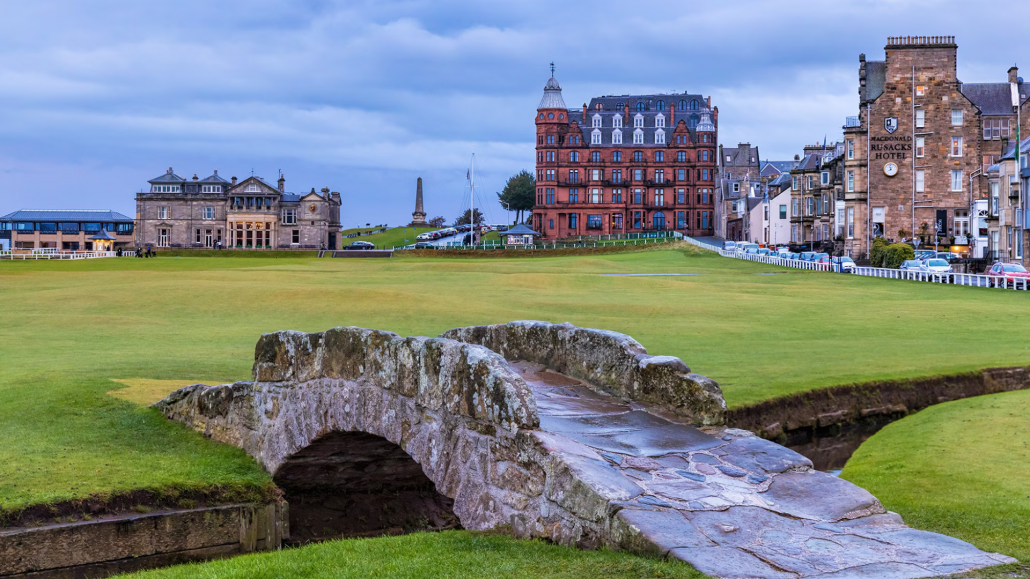
The major change took place at St Andrews, Scotland, one of the most iconic settings in the history of golf.
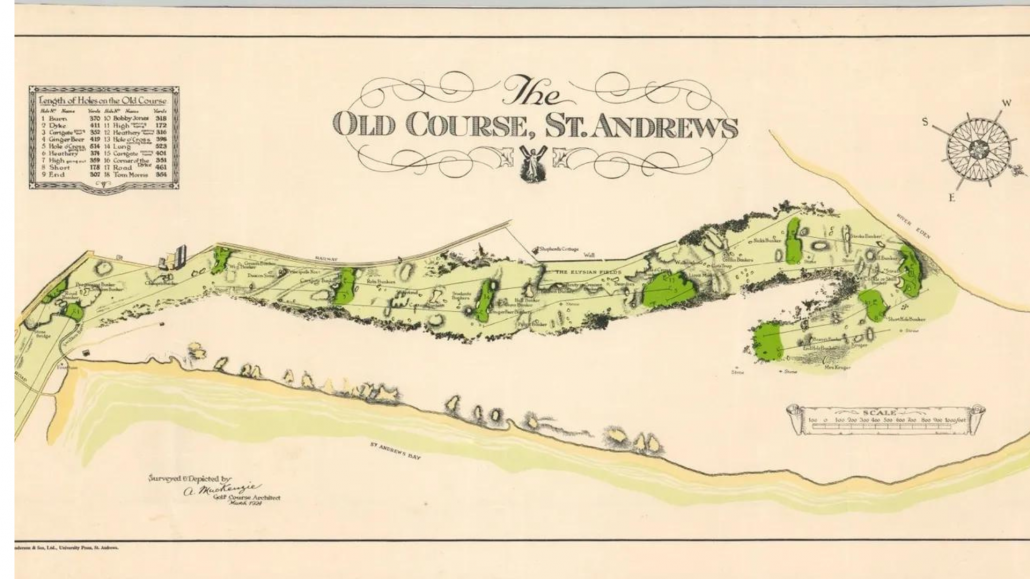
During the 18th century, the Old Course had 22 holes over a complete round. Players would play eleven holes in one direction and then return along the same route, playing many of them again.
However, on 4 October 1764, a decision was made that would change the history of the sport.
The club’s officials considered the first four holes to be too short and agreed to combine them into two. As a result, the course went from 22 to 18 holes.
This change was not the result of an international rule or a plan intended for all golf courses, but rather a practical decision related to the layout of the course itself.
Little could anyone have imagined that this arrangement would go on to have such a significant influence on the development of golf.
3. The origin of the 18-hole format: how did it become the worldwide standard?
The transformation of the Old Course at St Andrews marked the beginning of a tradition that gradually spread to other golf courses.
St Andrews gained enormous importance in the golfing world, and its course became a reference point for other clubs. As the sport grew in popularity and new courses were developed, the 18-hole format gradually became established.
However, there is an interesting historical detail: the 18-hole layout introduced in 1764 did not mean that the course immediately had 18 separate holes, each with its own green, as we understand a modern golf course today.
Over the following decades, the Old Course continued to evolve. In 1857, an important modification to the shared greens was completed, introducing separate holes and allowing the course to take on a layout more similar to the one we know today.
As golf continued to grow and St Andrews maintained its influence, 18 holes eventually became the standard format for a complete round.
Thus, a decision made at a Scottish golf course in the 18th century became one of the most recognisable traditions in the sport.
4. Do all golf courses have 18 holes?
Although 18-hole courses are the most common, not all golf courses have this layout.
The number of holes depends on the size of the land, the course design, the facilities and the type of experience the course aims to offer.
Here are some of the most common configurations:
- 9-hole courses: a shorter option that allows players to enjoy a round in less time. It is also possible to play the course twice to complete an 18-hole round.
- 18-hole courses: the most widely used format. They offer a complete round divided into two distinct sections of nine holes.
- 27-hole courses: usually organised into three nine-hole layouts that can be combined in different ways.
- 36-hole courses: feature four nine-hole layouts or two complete 18-hole courses, offering a variety of playing options.
Each configuration has its own characteristics, but they all share the same goal: to offer a course that combines strategy, precision and the ability to adapt to the terrain.
5. What does playing 18 holes mean? Front nine, back nine and course par
Playing 18 holes means completing a round of golf consisting of two sections of nine holes each. In golfing terminology, these two sections have specific names:
Front nine: refers to the first nine holes of the course, from hole 1 to hole 9.
Back nine: refers to the remaining nine holes, from hole 10 to hole 18.
This division is also reflected on scorecards, where players record their scores for each section separately.
Another fundamental concept is course par. This is the number of strokes set as the benchmark for completing the course. For example, a par-72 course sets a target of 72 strokes to complete all 18 holes.
The total par is calculated by adding together the par assigned to each hole. This is why not all 18-hole courses necessarily have a par of 72: courses with a par of 70, 71 or 73 are also common.
Understanding these terms helps you get a better idea of how a round is structured and how to read a golf scorecard.

A tradition that began in Scotland and continues around the world
The next time you play an 18-hole golf course, remember that this format has centuries of history behind it.
What began as an adaptation of the Old Course at St Andrews in 1764 eventually became an international tradition that continues to define the structure of the sport.
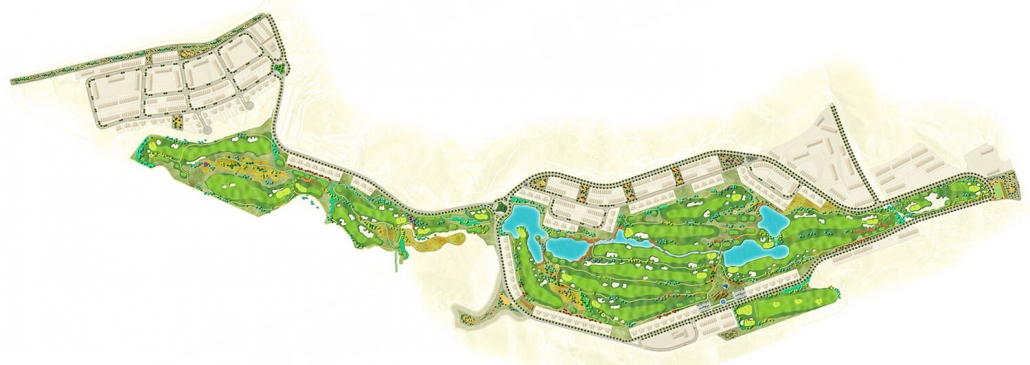
And if you would like to experience this tradition for yourself, we invite you to discover the 18 holes at Font Del Llop Golf Resort, where every round offers a new challenge surrounded by nature.
Because behind every round lies much more than 18 holes: there is history, evolution and a very special way to enjoy golf.
“`

